

Your Reliable Resistance Tube Manufacturer In China – Yanre Fitness
- A trusted company with clients are all over the world
- The company running for 24 years since 1997
- Guaranteed premium commercial quality of fitness equipment & accessories
- Helps to tone muscle
- Allows train different forms of workouts
- Can be used in Yoga, Functional Training, and Pilates
- Provides more concentrated pressure

Factory
Over 95% clients choose to cooperate with Yanre Fitness, after visiting our factory and trying our commercial gym equipment personally.

Patents
Our gym equipment meet ISO 20957 standard, with over 40 patents (Utility Model Patents & Appearance Design Patents)

R&D Invest
For more than 20 years, Yanre Fitness invested over 8 million USD for technology development.
Resistance Tube Manufacturer – Definitive FAQ Guide
Do you want to add resistance tubes to your commercial gym’s training equipment fleet?
Are you perplexed by the numerous resistance tubes available?
Have you been searching for a trusted resistance tubes manufacturer?
Do you wish to provide your customers with a wide range?
Would you like to purchase resistance tubing in bulk?
It can be difficult to choose the best resistance tubes from a huge variety.
This definitive guide is curated specifically to address all your questions about resistance tubes. Let’s get going without much ado.
Table of Contents
- How do you define a Resistance Tube?
- What are the different resistance tubes types?
- How many types of flat resistance bands are there?
- Do snap-resistant tubes exist?
- What all materials are used by the resistance tube manufacturers to produce them?
- What material are the handles made up of?
- What handle size does the resistance tube come in?
- What size is the usual resistance tube?
- How much resistance does a resistance tube offer?
- Which resistance tube has the highest level of resistance?
- How much does a resistance tube cost on average?
- How much does a resistance tube weigh usually?
- How can I be sure that the resistance tubes I buy are of good quality?
- Do the producers of resistance tubes provide logo printing services?
- Is it possible to customize the color of a resistance tube?
- What is the best way of storage and display of resistance tubes?
- Does the resistance tubes’ packaging include their rack?
- Do the resistance tubes come with ankle cuffs?
- Is it necessary to purchase a protective sleeve with a resistance tube?
- Should I purchase individual resistance tubes or full sets of them?
- Is there a factory that makes resistance tubes in China?
- Conclusion
How do you define a Resistance Tube?
Resistance tubes are made up of spherical sections of elastic with a hole in the middle, forming a tube shape. They are often used for strength training or therapy for those recuperating from injury.
The resistance tubes help build resistance without relying on gravity, hence, you can pull them in multiple directions. Contracting the muscles and strengthening them is a common function of the resistance tube.
It provides similar benefits and results as that of working out with free weights and cable machines.
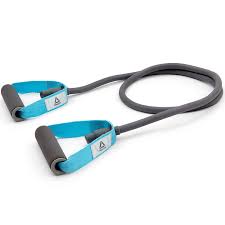
Figure 1. Resistance tube
What are the different resistance tubes types?
There are various types of a resistance tube available in the market.
Some of the main ones are as follows:
Flat Resistance Bands
These are rubber bands that are flat and elastic. During exercising, you can just wrap them over your hands or grasp them with the fingers.
Physical therapy is where they’re most commonly employed. They’re used to do workout for the lower body.
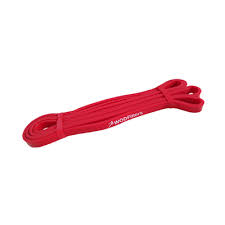
Figure 2. Flat resistance band
Tube Resistance Bands
They are tube-shaped bands having an empty cavity or a core that is filled. Tube resistance bands are frequently longer than the flat bands and offer better resistance than them. They are also referred to as “workout bands”.
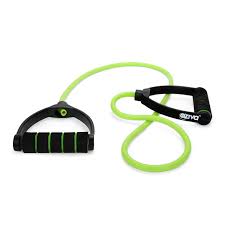
Figure 3. Tube resistance band
Handle Resistance Tube
Pros
- Also known as fit resistance tube.
- Comes with handles for a better grip.
- Used for dual exercises.
- No other add-ons needed.
- Mainly used for upper body workout.
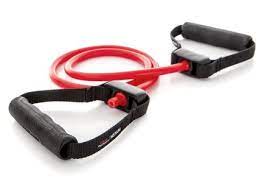
Figure 4. Handle resistance tube
Clip Resistance Tube
Pros
- The clips can be fixed with bars or handles.
- Quite stretchy.
- Possible to perform different movements.
Cons
- Not suitable for dual exercises.
- If broken, they can harm the user by snapping back.
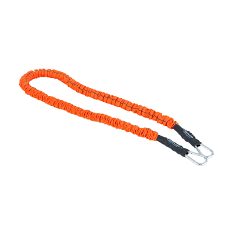
Figure 5. Clip resistance tube
Ring Resistance Tube
Pros
- Tube-shaped.
- Comes with soft handles.
- Broadly used for lower body workout.
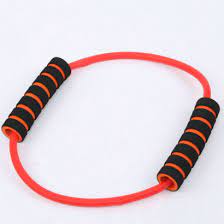
Figure 6. Ring resistance tube
Figure 8 Resistance Tubes
Pros
- Suitable for workout of the torso.
- The handles are bonded with a elasticated rubber.
Cons
- Doesn’t provide varied movement range.
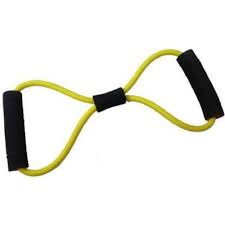
Figure 7. Figure 8 resistance tube
How many types of flat resistance bands are there?
There are three types of flat resistance bands:
Therapy Resistance bands
Pros
- Used majorly in physical therapy.
- Can help re-establish muscular function.
- Quite elastic.
Cons
- Easy to be pulled too much.
- No loops or handles.
- Not suitable for power lifting.
- Difficult to hold.
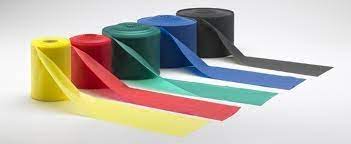
Figure 8. Therapy resistance bands
Loop Resistance tube
Pros
- Can be easily fastened with their loops.
- Come in a wide range of sizes.
Cons
- Upon being pulled too much, these can break quickly.
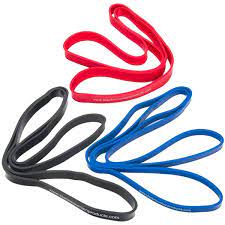
Figure 9. Loop resistance tube
Power Resistance tube
Pros
1. Thickest tube of all.
- Long-lasting.
- Suitable for intensive training.
- Highest resistance.
Cons
1. Too costly.
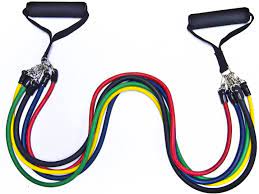
Figure 10. Power resistance tube
Do snap-resistant tubes exist?
Yes, there are multiple types of snap-resistant tubes that you can buy.
We advocate purchasing these since they reduce the risk of getting hurt from a band that easily breaks and retorts during workout.
What all materials are used by the resistance tube manufacturers to produce them?
The manufacturers use three different types of materials to produce resistance tubes:
Natural Rubber and Water
These tubes are made up of latex, a blend of natural rubber and water.
Pros
- Can withstand varied levels of resistance.
- Allow variety of movements.
- Quite light.
- Easy to clean, dust-resistant.
Cons
- Some people may be allergic to them.
- Their borders get curled.
Thermoplastic Elastomers (TPE)
Made up of artificial rubber and are also known as non-latex resistance tubes.
Pros
- Last longer than the latex tubes.
- Not reactive to chemicals hence safe for use.
Cons
- Not eco-friendly.
- Offer less springiness and movement range.
Fabric
These tubes are manufactured using fabric and latex.
Pros
- Non-slippery.
- Protected from UV rays.
- No chances of allergies.
- Environment-friendly.
- The borders remain uncurled.
Cons
- The least flexible.
- Due to high-resistance, they are not suitable for use by the seniors or for therapy.
What material are the handles made up of?
The handles of the resistance tubes are broadly made up of two materials.
Hard Plastic
The swappable handles are made from hard plastic. They can be taken out of the tube and used elsewhere. They are, however, difficult to hold and may result in injuries. As a result, gym goers may dislike them.
In a distribution center, however, having a wide range of products is always advantageous.
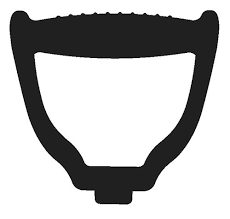
Figure 11. Plastic handle for resistance tube
Foam / Nylon
Padded handles, made up of fray-resistant nylon or foam, are included with some resistance tubes. You can hold these handles easily.
Before choosing a resistance tube, ensure that the handles are of good quality for a comfortable workout.
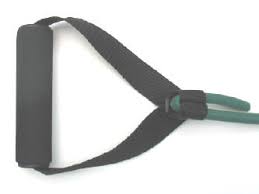
Figure 12. Foam/ Nylon Handle for resistance tube
What handle size does the resistance tube come in?
The resistance tube handle is typically 5 inches long and ¼ inches thick.
Make sure the handle is the right size. A large handle is slick, while a small handle is difficult to grasp. Hence, don’t choose any tube with irregular sizes.
What size is the usual resistance tube?
Resistance tubes are typically 1 to 8 feet long. The kind of the resistance tube determines its size.
The following are the general sizes of various types of resistance tubes:
- Therapy tube: 5-8 feet
- Mini-loop tubes: 1-4 feet
- Flat resistance tubes: 3 feet
- Ring resistance tube: 1 foot
- Clip resistance tube: 3 feet
- Power resistance tube: 7 feet
- Figure 8 resistance tube: 1-2 feet
How much resistance does a resistance tube offer?
Resistance tubes have a resistance range of 3 to 200 pounds. It varies from the kind and quality of the tube. The following is the general resistance range:
- Therapy tubes: 3 to 10lbs
- Figure 8 Resistance tube: 7 to 22lbs
- Clip resistance tube: 8 to 60lbs
- Handle resistance tube: 8 to 60lbs
- General loop tubes: 20 to 80lbs
- Power resistance loop tube: 200lbs
To know whether we provide a specific range, please contact us.
Which resistance tube has the highest level of resistance?
The maximum resistance is seen in power resistance loop tubes. It can withstand 200 pounds on average.
The thickness and variety of tubing determine the tube’s resistance level.
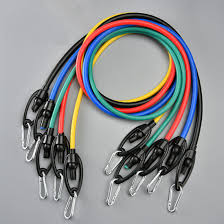
Figure 13. Power resistance tube
How much does a resistance tube cost on average?
A resistance tube on an average costs around $25. The price range for different types of resistance tubes are as follows:
- Therapy resistance band: $6 to $10
- Clip Resistance tube: $15
- Handle resistance tube: $12 to $17
- Figure 8 resistance bands: $11 to $15
- Power loop resistance band: $23
The prices above are indicative figures as much depends upon the type, quality, length, and resistance level of the resistance tubes.
How much does a resistance tube weigh usually?
Resistance tubes are available in weights ranging from 0.1 to 1kg.
The weight is determined by the resistance tube’s style and the level of resistance. The weight of the tube will increase as the resistance level increases.
How can I be sure that the resistance tubes I buy are of good quality?
Here are some points that you can keep in mind to ensure good quality of the product:
- Inspect the resistance tubes regularly for any kind of wear and tear.
- Look for any holes, frays, and cracks from time to time and replace them immediately.
- Ensure that the tubes are not over-stretched.
- Protect the tubes from the sun or UV rays.
- Furthermore, use mild cleaning solutions to clean the tubes to enhance their life.
Do the producers of resistance tubes provide logo printing services?
Yes, Yanre Fitness provides logo printing services on resistance tubes.
To know more about the customization options and charges, please contact our sales department.
Is it possible to customize the color of a resistance tube?
Yes, it is possible to customize the color of your resistance tubes with Yanre Fitness.
Every manufacturer, on the other hand, follows a standard approach based on the resistance levels. The resistance tube’s color corresponds to the resistance level:
- Yellow: Extra light resistance
- Blue: Light resistance
- Green: Medium resistance
- Black: Heavy resistance
- Red: Extra heavy resistance
Yet, some manufacturers may follow their own color scheme. So, we suggest that you get in touch with Yanre Fitness to know about our color scheme.
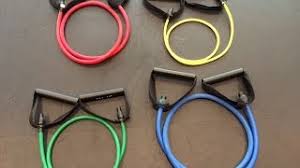
Figure 14. Resistance tubes in a variety of colors
What is the best way of storage and display of resistance tubes?
Resistance tubes can be displayed by placing them on a wall-mounted rack. Steel is commonly used to manufacture these racks.
Fabric bags are also available to store resistance tubes. To avoid damage to the bag, never fill it beyond its capacity.
Does the resistance tubes’ packaging include their rack?
No, the packaging doesn’t include the racks. So, you’ll have to buy them separately.
This is because selling a resistance tube rack to a seller who is only seeking for resistance tubes, and vice versa, is unrealistic.
However, some manufacturers may offer package deals in which you can save money on both items.
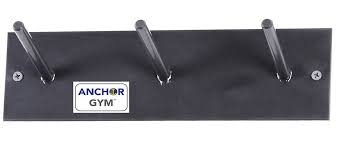
Figure 15. Resistance tube rack
Do the resistance tubes come with ankle cuffs?
No, the resistance tubes do not come with ankle cuffs.
It is, nonetheless, a vital accessory to have while exercising with resistance tubes. Lateral and front/back leg workouts are done with ankle cuffs. Each ankle cuff is equipped with a clip that may be attached with the tube resistance bands.
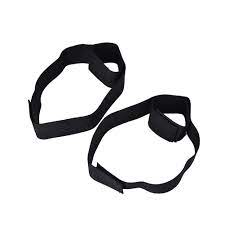
Figure 16. Ankle cuffs for resistance tube
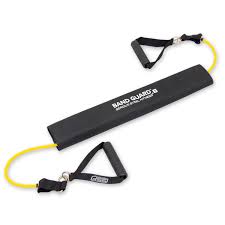
Is it necessary to purchase a protective sleeve with a resistance tube?
Yes, if your budget permits, you must buy protection sleeves because they can save you enough money over time by extending the resistance tube’s shelf life.
The safety sleeve prevents the tube from coming into contact with the floor when it is used under the feet. As a result, it guards it against damage.
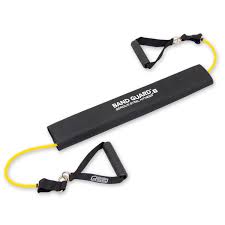
Figure 17. Resistance tube with protective sleeve
Should I purchase individual resistance tubes or full sets of them?
We suggest that you buy full sets of resistance tubes for your commercial gym or distribution center.
This is due to the fact that they differ depending on the level of resistance. Clients range from novices to seasoned athletes in various settings. As a result, if you have comprehensive sets, you’ll be able to meet the needs of a wide range of people.
Is there a factory that makes resistance tubes in China?
Yes, Yanre Fitness is a leading Chinese manufacturer of resistance tubes.
We are a well-known name in the field of fitness equipment and accessories. For bulk orders, please contact us and we will gladly assist you.
Conclusion
We believe that our comprehensive FAQ guide provided you with the necessary knowledge regarding resistance tubes. You may now confidently choose which resistance tube to purchase.
Yanre Fitness has a wide selection of long-lasting resistance tubes that can enhance the value of your commercial gym or distribution center.
Please get in touch with us for additional information and a personalized quote.